


Raw material
Wood is a living and evolving material. If treated well, it conveys well-being.
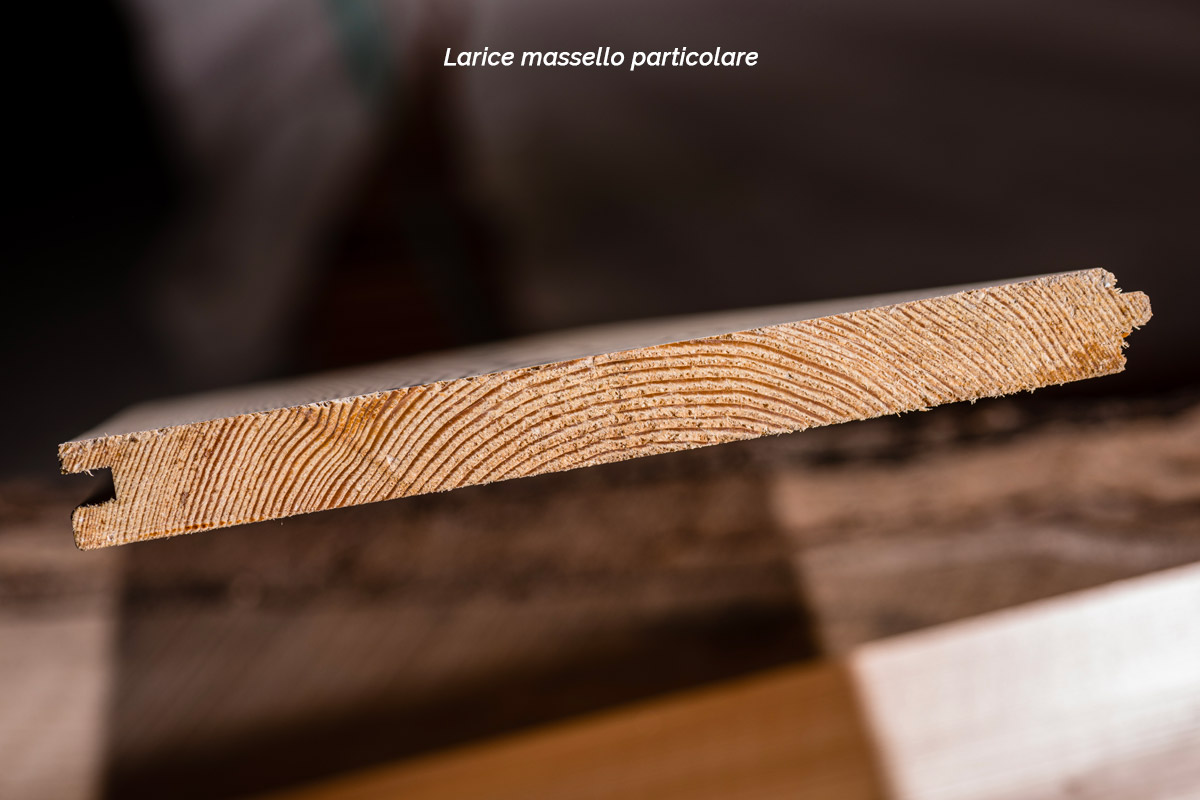
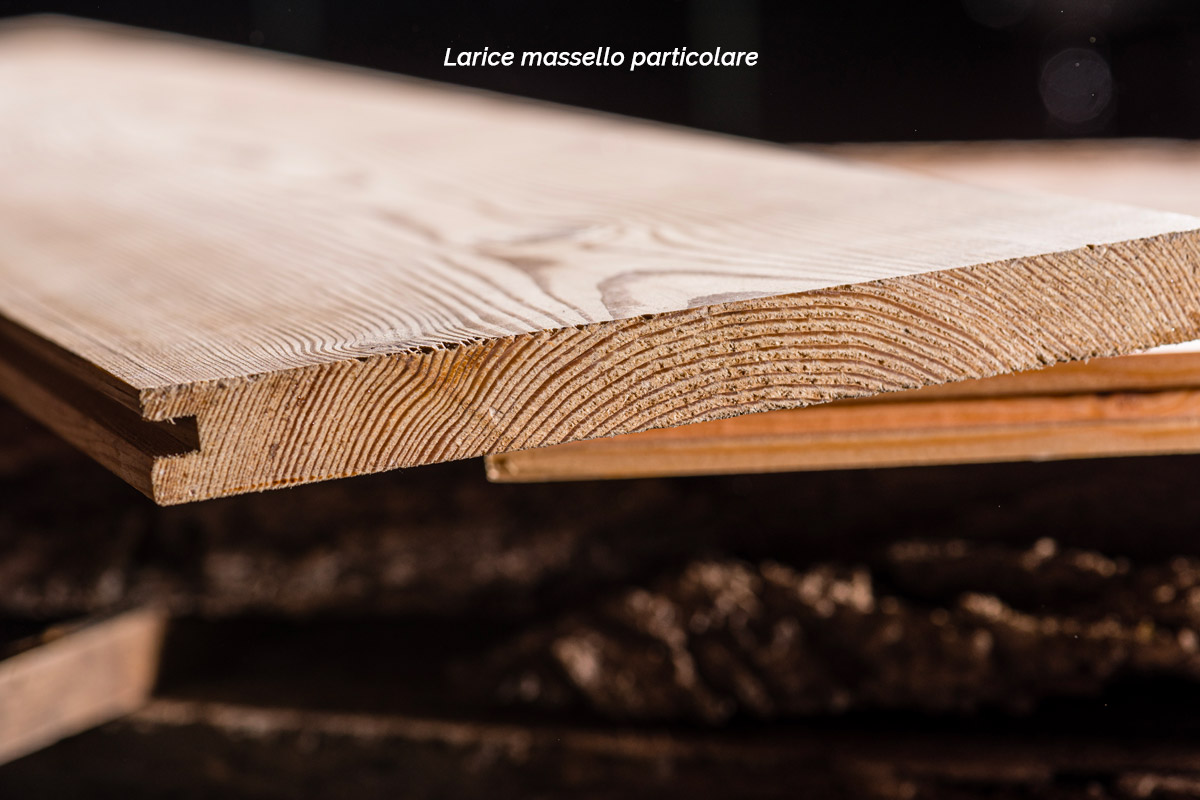


LARCH
For the construction of exteriors exposed to the action of atmospheric agents.
Calligaro Category: Building material
ART. LARCH - Nat. - European
Request original sample.
Photos and colors of the samples are for information only.
FINISH: MATT
FEATURES:
- 15 mm
- 20 mm
- on request
- Birch
- Spruce
- veneered in wood
- 15 mm
- 20 mm
- 25mm
- 30 mm
- 35 mm
- 45 mm
- on request
- Weight 600 kg / m 3
- Massive beams
- 8 x 10
- 10 x 10
- 10 x 12
- 15 x 15
- 20 x 20
- Maximum length 13 m
Nominal thickness SUPPORTED
Multilayer
SOLID WOOD nominal thickness
Specific weight
Dimensions
Are you looking for wood for internal or external cladding?
Larch Wood: Characteristics and Applications
In Europe, for example, the common larch or European larch is widespread, while the western larch is very present in the United States and Canada. In recent years, Japanese larch has been gaining ground, a particularly valuable variety thanks to its ability to resist diseases, weeds and parasites ..
It is not uncommon to find larches in alpine landscapes (in particular in Austria or in lower Bavaria), or in any case in highlands (for example, it is particularly widespread in the Pyrenees and the Carpathians). The larch forests are generally quite extensive, and nevertheless appreciated by hikers and trekkers, due to the pleasant aesthetic appearance of the plants, which with their not too dense foliage let the sun's rays pass, giving life to suggestive plays of light, and aromatic qualities of the leaves.

The European larch - Larix decidua
The larch wood has a heartwood with a variable color between dark sand and reddish. The main reason for this difference in pigmentation lies above all in the high ground: the higher you go, in fact, the more intense the color of the wood.
As regards the mechanical capabilities, however, larch is usually a hard and compact wood (the few resinous sites inside the heartwood do not damage its structure too much), even if it is always a good idea to be sure of this through special controls, since this is one of the woods whose quality undergoes the most striking variations depending on the type of cultivation and the geographical area of origin.
Curing is quick and effective, and even once the wood has dried it retains remarkable elasticity properties. Nevertheless, the frequent presence of knots can make the machining more problematic than it may appear at first glance.
Larch is an excellent wood for interior and exterior cladding, thanks to its remarkable insulating properties. Larch wood tends to take on a greyish hue with the passage of time and this chromatic range makes it particularly popular as a cladding for exteriors. Furthermore, the remarkable hardness, resistance to stress and good waterproofing coefficient make it an ideal material for pergolas and load-bearing wooden structures (bridges, load-bearing elements of houses or boats).
| Category / Family / Name | Conifers / Pinaceae |
| Origin | Italy - Central Northern Europe |
| Color | Moderately reddish brown, narrow yellowish sapwood |
| Weaving | Generally straight grain and medium-fine texture |
| Mass (after seasoning) | +++ Heavy (620 Kg m2) |
| Durability | ++ Medium - High |
| Stability | ++ Good |
| Machinability | ++ Good |
| Hardness | - Modest |
| Mechanical characteristics | + Axial 510 Kg / cm2, bending 920 Kg / cm2 |
| Gluing | ++ Good |
| Painting | ++ Good |
| Legend | - Poor - Moderate + Fair ++ Good +++ Excellent |
Larch: Its lifespan reaches 800 years.
Larch wood is used both for interiors and exteriors, in load-bearing and non-load-bearing structures. It is used for highly stressed construction elements, in the construction of boats, bridges, underground parts and immersed in water. For interiors, the use ranges from windows and doors, through floors and walls, to furniture. Larch exterior cladding has been very popular in recent times, which, untreated and unprotected, turn gray after a few years.